Head of the Department


Darinko Omazić, B.Sc.
Phone: +385 31 51 55 81
Fax. +385 31 51 55 89
darinko.omazic@poljinos.hr

Professional staff:


Tomislav Dumančić, B.Sc.,
Technologist

Darko Kolar, B.Sc.,
Technologist                                                  darko.kolar@poljinos.hr

Goran Krizmanić, Ph.D.,
Technologist
goran.krizmanic@poljinos.hr                


The Department for Basic Seed Production is gradually emerging since 1931 from trial economy that had on the end of the Second World War about 100 ha of land. Immediately after the war, by the first agrarian reform is gotten new 160 ha, and later about 220 ha by land consolidation on area of Tenje. Additional 250 ha of the land, the Agricultural Institute Osijek was bought from own resources in the period from 1961 to 1990 year. Real establishment of the Department for Basic Seed Production dated from 1961 year, when the Department for Improvement of Agriculture is overgrown in the Agricultural Institute Osijek. Since that time a breeding programs of the main field crops have begun acceleratory to develop, own cultivars and hybrids were created, and raised necessity for seed multiplication of the high categories of self-pollinated crops and inbred lines for making hybrids. Hence, the Agricultural Institute Osijek was buying a land from the own resources on the worker’s income loss, considering that investment in the land can provide a better future for existence and work of the Agriculture Institute Osijek. From middle of 1960’s by transferring on mechanize soil cultivation is given emphasis on land buying. Thus, in the previous period, the Agricultural Institute Osijek has managed the land surface to 1000 ha.

On the Department for Basic Seed Production, beside the land what is near the buildings and storage facilities of the Agricultural Institute Osijek, all basic technique is concentrated (tractors, seeders, sprayers, combines, and workshop for repairing of machines and others). Unfortunately, in the Patriotic war, a lot of mechanization was destroyed during the war’s destruction of the town Osijek. Through the land of the Department has passed the front line, and numerous minefields were set up.

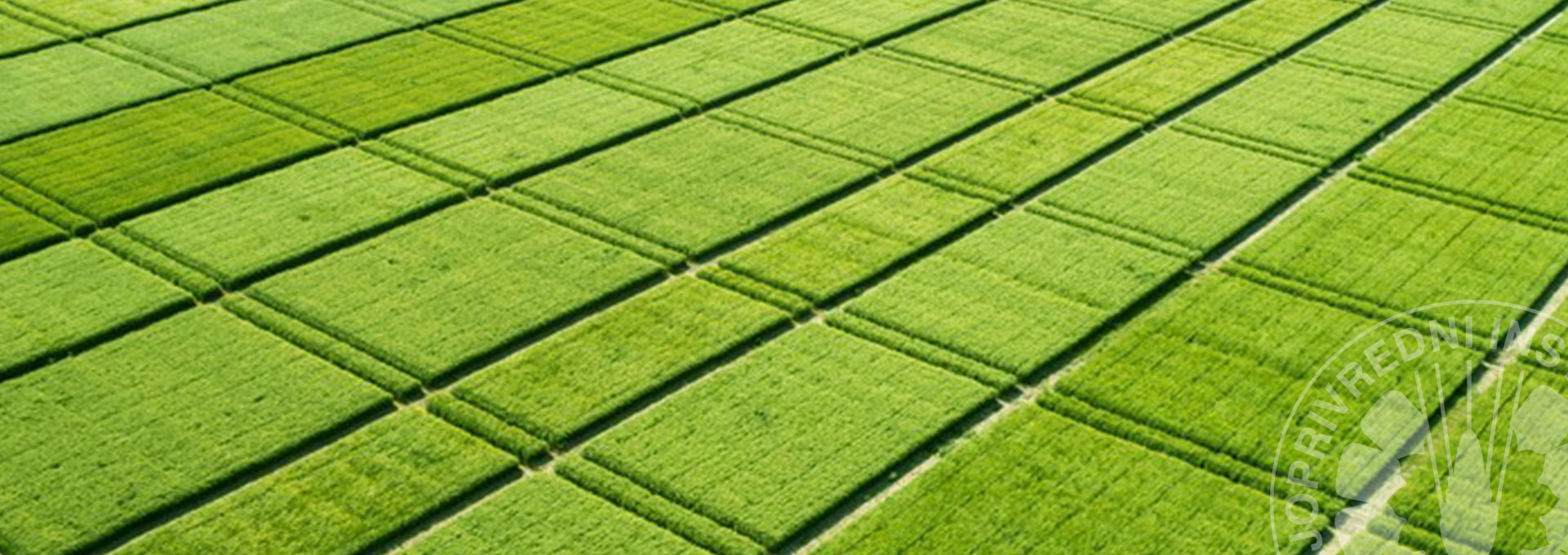
The process of demining has started, but it isn’t fast and simple because it requires a large material resources. Present time, the Department for Basic Seed Production cultivates 440 ha (about 320 ha for multiplication of pre-basic and basic seeds, and about 120 ha for trials and selection material of breeding departments), and about 350 ha is still under the mines. The rest part of the land until 1000 ha are canals and ways, and 130 ha that was the Fruit Nursery, segregated from the Agricultural Institute Osijek, was sold to the "Kraš" factory from Zagreb 20 years ago.

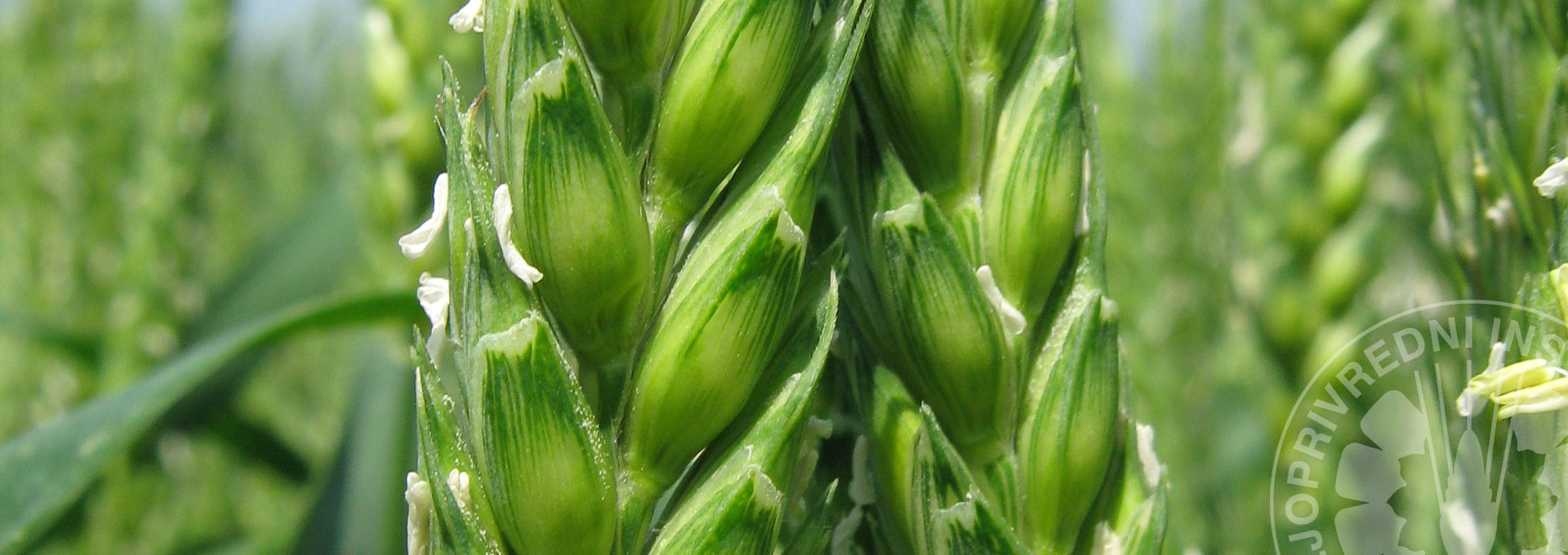
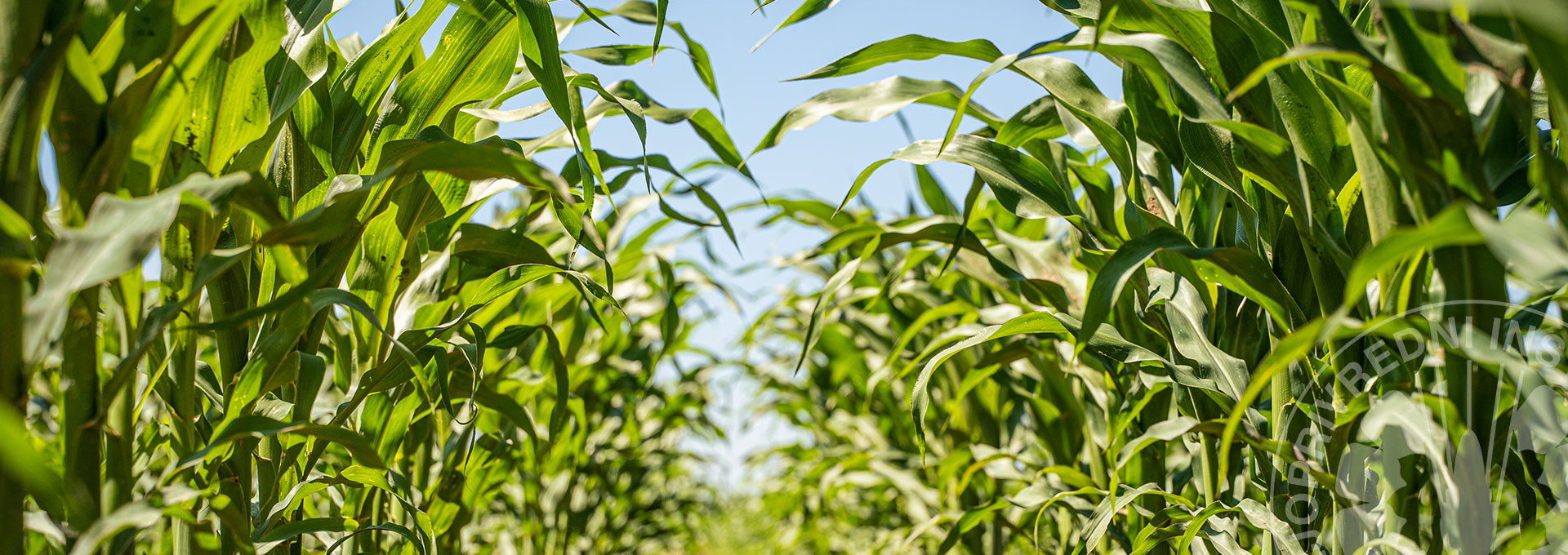
Since establishment to now the main activity of the Department for Basic Seed Production is multiplication of pre-basic and basic seed categories of the main field crops. This production is closely connected with the breeding departments and the Department for Seed Production and Processing in the Agricultural Institute Osijek. The highest seed production belongs to wheat, and then to winter and spring barley, soybean, maize, sunflower, alfalfa, forage peas and something to the less important crops. Furthermore, a large part of the land is adjusted to the trial needs of all departments. Namely, all is set up that enable quickly and quality performance of important technological operations in exactly predicted agro-technical terms.

The Department gives the services to other breeding departments of the Agricultural Institute Osijek, primarily in basic and pre-sowing cultivation, as well as in other technological processes towards the necessity, and regularly repairs the small field trial mechanization (small tractors, small seeders, small sprayers, small combines, etc.) that is placed on the breeding departments.


On the end, it has to mention that in the Department for Basic Seed Production have spent working time known agronomists as managers or technologists: Piškor Nikola, Palčić Josip, Marković Andrija, Andabaka Stjepan, Bilandžić Marijan, Jurić Ivo, Dumančić Tomislav, Andračić Vlado, Marko Josipović, Ph.D.,  which have given a significant contribution in development of the Department for Basic Seed Production and the Agricultural Institute Osijek entirely. The current manager of the Department for Basic Seed Production is Darinko Omazić, B.Sc., who also invests large efforts that production work raise on higher level.

More important references
:

Josipović, M. (1991.): Infiltracijske osobine tala u Baranji i njihova pogodnost za navodnjavanje. Magistraski rad. Univerzitet u Novom Sadu, Poljoprivredni fakultet Novi Sad.

Josipović, M. (1996.): Utjecaj obroka i dubine natapanja dreniranog tla na svojstva kukuruza. Disertacija. Sveučilište u Osijeku. Poljoprivredni fakultet Osijek.

Josipović, M., Brkić, I., Jambrović, A., Šimić, B. (1998): Prilagodbe proizvodnje novih hibrida kukuruza agroekološkim i socioekonomskim specifičnostima istočne Hrvatske. Agronomski glasnik, LX, 5-6, 323-331.

Josipović, M., Kovačević, V., Brkić, I. (1998): Effects of rates and dephts of irrigation on maize properties. Fifth Congres of ESA (Europian Society of Agronomy), Short Communications, Volume II, Zima, Miroslav; Bartološova, M.L. (ur.).Nitra: Europian Society of Agronomy, 349-350.

Kovačević, V., Josipović, M.(1998): Weather and soil limitations for maize growing in the Eastern Croatia. Fifth Congress of ESA (Europian Society of Agronomy), Short Cmmunications, Volume II. Zima, Miroslav; Bartološova, M.L. (ur.). Nitra: Europian Society of Agronomy, 1998. 157-158.

Stipešević, B., Žugec, I., Josipović, M. (2000): Investigation of rational soil tillage for maize (Zea mays L.) in eastern Croatia. Proceedings of the 15th International Conference of the International Soil Tillage Research Organization, "ISTRO-2000"/ J.E. Morrison, Jr., Chair (ur.).

Forth Wortx, Texsas, USA: P. Dyke, Texsas Agricultural Experiment Station temle. 215-217, Texsas.

Kelava I., Stipešević, B., Josipović, M. (2002): Investigation of reduced soil tillage for some cereale crops in Eastern Croatia. I Possibilities of Rational Soil Tillage for winter wheat (Triticum aestivum) in Baranja region. ISTRO 2000 Conference book, J.E. Morrison, Jr. Chair; 220-221, Texas, USA

Rastija, M., Bukvić, G., Josipović, M. (2002): Response of corn to zinc fertilization. Energy efficiency and agricultural engineering. Mihailov, Nicolay (ur.). Rousse: Printing house of " Anglel Kunchev" University of Rousse, 131-136 Vol. 1.

Petošić, D., Kovačević, V., Josipović, M. (2003):Phosphorus availability in hydromorphic soils of Eastern Croatia. II Plant Soil and Environment. 49, 3;394-401.

Kovačević, V., Josipović, M. (2003):Response of wheat to nitrogen fertilization in the Eastern Croatia.Novenytermesztesi Tudomainio Nap ″Szantofoldi noveniek tapanyagellatasa″, Csorba, Zsuzsa; Jolankai, Peter; Szollosi, Gergely (ur.).Budapest: Maguar Tudomanyos Akademia, Novenytermesztesi Bizottsag, 310-315.